The 60-second verdict
Quick answer: chefs can use an AI voice recorder for short, deliberate menu-development notes, approved briefings and shift handovers, but every quantity, temperature, allergen, shelf-life and production instruction must be verified in the kitchen’s controlled records.
Best fit: Chefs who need recoverable audio and human-verified notes in an authorised workflow. Use another method when: recording is prohibited, a participant declines or the approved process requires manual notes.
Evidence basis and limits
- Decision factors covered: 1. Build a menu-development notebook by voice; 2. Keep recipe development separate from controlled recipes; 3. Make the pre-service briefing easier to execute.
- Evidence rule: Claims are weighted by consequence: capture failure, changed meaning, access and recovery matter more than polished wording.
- Boundary: Examples and workflow recommendations must be tested with representative recordings, the intended users and the actual approval process before rollout.
A chef rarely has time to stop mid-service and type a useful note. Ideas arrive while tasting a sauce, checking prep, speaking to a supplier or reviewing a difficult shift. Voice capture can preserve those moments, but only when the note has a clear destination. Otherwise the kitchen ends up with hours of audio and no better system.
The most effective approach is to use short recordings for three separate jobs: menu development, pre-service communication and shift handover. Each needs a different structure.
1. Build a menu-development notebook by voice
A spontaneous dish idea is usually incomplete. Capture enough detail to make the next test possible rather than trying to dictate a finished recipe.
A useful menu note includes:
- working dish name;
- the flavour or guest experience being aimed for;
- core ingredients and likely seasonality;
- technique that needs testing;
- allergen and dietary considerations to investigate;
- cost, yield or supply questions;
- the next practical trial.
For example: “Charred leek starter, smoky but fresh, cultured cream, toasted seed crumb, needs acid. Test cider vinegar against preserved lemon. Check sesame risk in seed mix. Supplier price for baby leeks before Friday.”
That note is actionable. A general recording saying “do something with leeks” is not.
2. Keep recipe development separate from controlled recipes
An AI transcript can organise ideas, but it should not become the authorised recipe, allergen matrix or production specification. Quantities, temperatures, timings and allergen information must be verified through the kitchen’s normal controls.
When a trial succeeds, transfer the final method into the approved recipe format. Record:
- ingredient weights and yields;
- critical temperatures and timings;
- plating standard;
- allergen status;
- storage and shelf-life controls;
- portion cost and selling-price assumptions;
- version and approval date.
The voice note is the workshop. The controlled recipe is the operational instruction.
3. Make the pre-service briefing easier to execute
A useful briefing is not a motivational speech. It gives the team the few facts that change how tonight’s service should run.
- Bookings: covers, large tables, timing pressure and notable service requirements.
- Menu changes: unavailable items, substitutions and specials.
- Dietary controls: verified allergen or dietary information from the approved system.
- Station readiness: shortages, prep gaps and equipment issues.
- Responsibilities: who owns each problem before doors open.
- Escalation: when the pass, manager or head chef must be told.
Finish with a read-back of the changes that could cause a service failure. A transcript may help create a recap, but the team still needs the live briefing and access to controlled allergen information.
4. Turn post-service discussion into improvement
Debriefs often fail because everyone remembers only the loudest problem. A five-minute structured recording can preserve what actually happened while the shift is fresh.
Ask:
- Which dish or station slowed service?
- What evidence supports that conclusion?
- Was the problem prep, equipment, communication, demand or technique?
- What was done during service?
- What must change before the next shift?
- Who owns it and by when?
Keep staff performance or disciplinary matters outside a widely shared kitchen recording. Move sensitive issues into the appropriate management process.
5. Use voice handover for unfinished work
A handover should tell the next team what state the kitchen is in. Include:
- prep completed and prep outstanding;
- stock shortages and expected deliveries;
- equipment faults and temporary workarounds;
- products requiring priority use;
- bookings or functions affecting production;
- verified dietary or allergen actions;
- one owner for every unresolved item.
“Check fridge” is weak. “Larder chef to verify the temperature log and move the prepared terrine only if the reading is within the approved range before 10:00” is usable.
Kitchen conditions can defeat transcription
Extraction fans, music, pans, refrigeration and several simultaneous conversations are difficult for any recorder. Test the device in the real kitchen. For critical notes, step into a quieter approved area and dictate after washing hands and completing the task safely.
Do not place or handle a recorder where it creates a hygiene, contamination, distraction or burn risk.
A workable NERALVO Halo setup
Check whether NERALVO Halo fits chefs work can capture short menu ideas, approved briefings and post-shift debriefs using 64GB local storage. It records independently, then syncs by Bluetooth with DOWAY for transcripts, summaries and structured notes.
The best use is not continuous kitchen recording. It is deliberate capture at defined moments, followed by transfer into the recipe file, task list, stock system or maintenance process.
What good looks like
A successful chef voice-note workflow produces fewer forgotten tests, clearer briefings and cleaner handovers. It does not create unofficial recipes or replace food-safety controls. Capture the idea quickly, verify the operational detail and move the final information to the system the kitchen already trusts.
Cloud software, a dedicated recorder or manual notes?
For Chefs, the right answer changes with the setting. This matrix deliberately gives each method a situation where it can be the strongest choice.
| Situation | Best starting point | Reason |
|---|---|---|
| scheduled remote meetings | Cloud meeting software | Calendar automation and shared integrations are usually the strongest advantage. |
| in-person or mobile work | Dedicated recorder | Independent capture reduces reliance on an active phone or laptop. |
| recording is refused or prohibited | Manual notes or an approved alternative | The boundary takes priority over convenience. |
| mixed online and offline work | Governed hybrid | Use each method only in the setting it actually fits. |
Related guides
Profession workflow
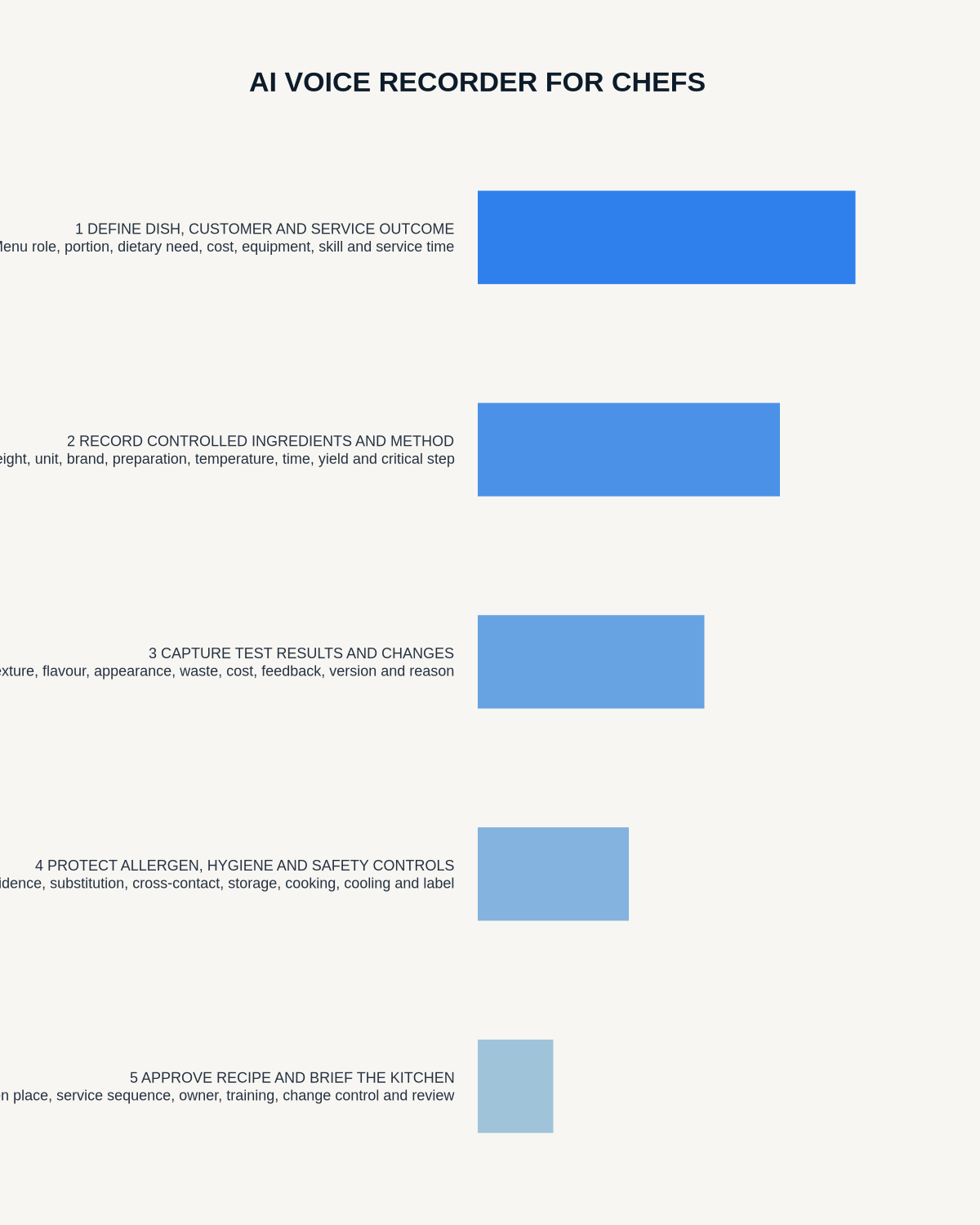
Visual map for AI Voice Recorder for Chefs: Better Recipe Development and Kitchen Briefings
- Prepare the approved useDefine purpose, safe position, permission and the required formal record.
- Capture context firstState the case, asset, person, location or event identifier before detail.
- Human-verify evidenceCheck technical terms, units, names, dates, decisions and uncertainty.
- Complete the formal recordTransfer only verified information and apply access and retention controls.
On this page
Related guides
See whether Halo fits this workflow
Review the NERALVO Halo specifications, included services, delivery information and current offer only after completing the guide.
Found an error or an out-of-date claim? Email support@neralvo.com with the article address and a supporting source.