The 60-second verdict
Quick answer: archivists can use an authorised AI voice recorder to preserve donor knowledge, provenance, original order, rights and access restrictions during accession interviews. The recording should be transformed into linked archival records and preserved in approved formats—not left as an uncontrolled transcript inside a transcription app.
Best fit: Archivists who need recoverable audio and human-verified notes in an authorised workflow. Use another method when: recording is prohibited, a participant declines or the approved process requires manual notes.
Evidence basis and limits
- Decision factors covered: Interview for what the records cannot explain; Create four separate records; Establish function and custody.
- Evidence rule: The decision is based on the complete capture-to-action workflow, not a single feature or marketing accuracy percentage.
- Boundary: Examples and workflow recommendations must be tested with representative recordings, the intended users and the actual approval process before rollout.

An archive may arrive as labelled files, unmarked boxes, digital folders, photographs and personal explanation. The records show what survived; the creator or donor may be the only person able to explain why the records exist, how they were used and what remains elsewhere.
Interview for what the records cannot explain
- Creator and organisational history.
- Functions and activities that generated the records.
- Original filing and naming systems.
- Relationships between paper and digital material.
- Abbreviations, nicknames and internal terminology.
- Missing, destroyed or retained records.
- Other knowledgeable people or repositories.
- Sensitive series, rights and access concerns.
Create four separate records
| Record | Purpose |
|---|---|
| Source audio | Preserves the authorised original conversation |
| Checked transcript or interview log | Makes names, topics and timestamps searchable |
| Accession context note | Summarises provenance, arrangement, gaps and actions |
| Rights and restrictions record | Documents ownership, copyright, access and sensitivity |
Establish function and custody
Ask who created the records, for which activity, who maintained them, where they were stored, whether they were reorganised, who selected material for transfer and what remains elsewhere. Label each answer as first-hand knowledge, organisational memory, documentary evidence or assumption.
Use oral evidence to reconstruct original order
Explore series and file structures, chronological or subject arrangements, indexes, draft and final versions, paper and digital equivalents, codes and changes caused by moves or migrations. The conversation informs professional archival judgement; it does not dictate arrangement automatically.
Document gaps without inventing explanations
For each missing series or period, capture the explanation offered, whether destruction was routine or accidental, possible duplicates, other custodians and confidence in the account. Preserve unknowns as unknowns.
Discuss rights and access deliberately
- Physical and intellectual ownership.
- Copyright and third-party material.
- Personal and special-category data.
- Confidential business information.
- Closure periods and reading-room access.
- Digitisation, quotation and online publication.
- Future permissions and contact arrangements.
Informal preferences should be recorded, but formal terms belong in accession or deposit documentation.
Capture born-digital context safely
Record systems, software, folder structures, naming conventions, email accounts, shared platforms, exports, duplicates and technical owners. Never speak passwords, encryption keys or credentials into the recording.
Verify names and technical terms
Create a post-interview list of people, organisations, predecessor bodies, places, dates, internal codes, record-series titles and specialist terminology. Check against documents and authoritative sources before catalogue use.
Use a controlled accession workflow
- Define purpose and intended archival use.
- Confirm permission and restrictions.
- State accession reference, date and participants.
- Cover provenance, function, arrangement, gaps and rights.
- Reference boxes, folders, systems or series aloud.
- Generate and correct the transcript.
- Create the context note and rights actions.
- Link outputs to accession and collection records.
- Preserve required files in approved formats.
- Restrict or delete working copies under policy.
Do not rely on the transcription app as the archive
Preserve required audio, metadata and derivatives in the archive’s own controlled systems. Document conversion, editing, redaction and access restrictions so future users can understand the source without depending on one account or proprietary interface.
Where NERALVO Halo fits
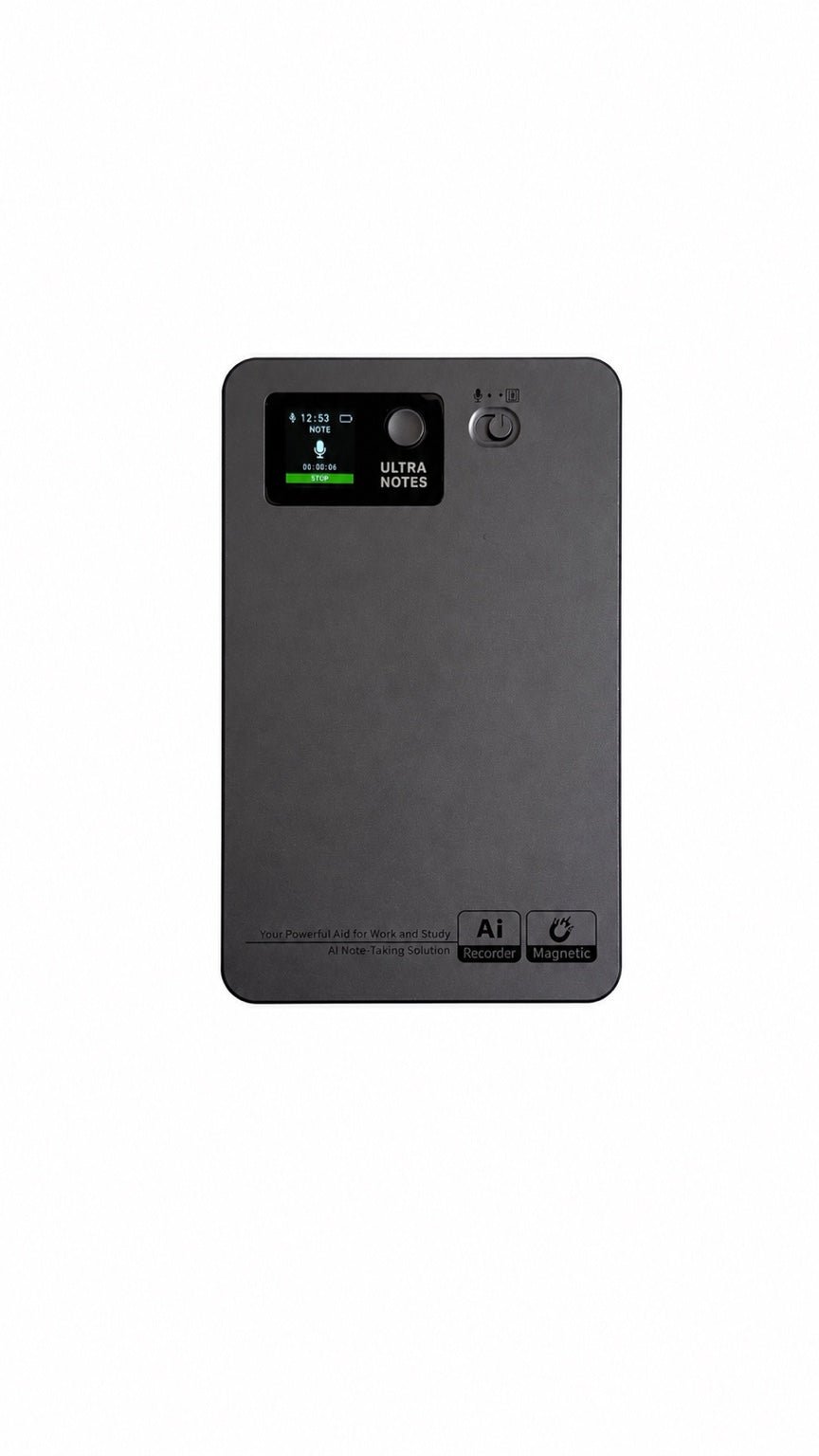
View Halo specifications for archivists use can support approved accession interviews, collection walkthroughs and post-transfer debriefs through portable NOTE capture, 64GB local storage and structured DOWAY notes. Archivists should verify export formats and long-term preservation requirements before use.
Cloud software, a dedicated recorder or manual notes?
For Archivists, the right answer changes with the setting. This matrix deliberately gives each method a situation where it can be the strongest choice.
| Situation | Best starting point | Reason |
|---|---|---|
| scheduled remote meetings | Cloud meeting software | Native remote-meeting workflows can be more efficient here. |
| in-person or mobile work | Dedicated recorder | A separate battery and recoverable local source improve resilience. |
| recording is refused or prohibited | Manual notes or an approved alternative | Manual notes are the correct control when recording is unavailable. |
| mixed online and offline work | Governed hybrid | A hybrid can combine automation with reliable physical capture. |
Frequently asked questions
Can the transcription app serve as the archive?
No. Required audio and metadata should move into approved archival formats and systems.
Can an interview prove ownership or copyright?
It may provide evidence or a lead, but formal documentation still requires review.
Should uncertain gaps be filled with the most likely explanation?
No. Preserve uncertainty and identify further research.
Can original order be reconstructed from one interview?
The interview can help, but decisions should also use the records, systems and other evidence.
Should every donor interview be open to researchers?
No. Rights, confidentiality, sensitivity and agreed restrictions must be applied.
Authoritative guidance and related reading
- The National Archives: archives sector
- Archives and Records Association
- AI Voice Recorder for Oral Historians
- AI Voice Recorder for Museum Curators
Final accession checklist
- Recording linked to the correct accession
- Creator, function and custody explained
- Original order documented without assumption
- Gaps and uncertainty visible
- Rights recorded formally
- Names and terminology verified
- Preservation route proven
On this page
Related guides
See whether Halo fits this workflow
Review the NERALVO Halo specifications, included services, delivery information and current offer only after completing the guide.
Found an error or an out-of-date claim? Email support@neralvo.com with the article address and a supporting source.