Apprentices learn through real work, coaching and study, but useful detail can disappear before the e-portfolio or training record is updated. A short reflection made after the task is safely complete can preserve decisions, evidence locations and questions without pretending that the recording itself proves competence.
The 60-second verdict
An AI voice recorder for apprentices can support permitted training notes and private post-task reflections. It cannot make work safe, authenticate evidence, demonstrate practical competence automatically or write assessed work the apprentice cannot explain.
Best fit: Apprentices who need recoverable audio and human-verified notes in an authorised workflow. Use another method when: recording is prohibited, a participant declines or the approved process requires manual notes.
Evidence basis and limits
- Decision factors covered: The task → reflection → evidence → verification workflow; Stage 1: Finish the task safely; Stage 2: Record personal contribution.
- Evidence rule: Claims are weighted by consequence: capture failure, changed meaning, access and recovery matter more than polished wording.
- Boundary: Examples and workflow recommendations must be tested with representative recordings, the intended users and the actual approval process before rollout.
The task → reflection → evidence → verification workflow
| Stage | Question | Output |
|---|---|---|
| Task | What work was completed and what was my personal responsibility? | Accurate context |
| Reflection | Which decisions, controls and learning mattered? | Apprentice’s account |
| Evidence | What genuine documents, observations or artefacts exist? | Evidence map |
| Verification | Who or what confirms accuracy and acceptance? | Provider, employer or assessor check |
This workflow keeps reflection useful while preserving the difference between a personal account and independently verified occupational competence.
Stage 1: Finish the task safely
Do not operate a recorder while driving, using machinery, working at height, handling live systems, moving materials or performing another hazardous activity. Follow the risk assessment, method statement, permit, supervision and employer procedure first.
If anything is unclear, stop and ask the competent person. An AI-generated explanation is not authority for safety-critical work.
Stage 2: Record personal contribution
A strong reflection identifies what the apprentice actually did. Separate personal responsibility from work completed by the wider team.
Include:
- Task, date and workplace context.
- Personal role and supervision level.
- Safety controls, permits and checks followed.
- Tools, systems and approved information used.
- A decision made and the reason.
- Result and quality check.
- What would be repeated or changed.
Do not inflate involvement or describe another person’s work as the apprentice’s own.
Stage 3: Identify genuine evidence
Possible evidence depends on the occupational standard and assessment plan. It may include:
- Workplace documents or records.
- Annotated photographs.
- Recorded observation.
- Audio or video where accepted.
- Products or artefacts.
- Logbook entries.
- Witness evidence completed through the approved process.
- Professional discussion preparation.
The current Skills England requirements for apprenticeship assessment explain that assessment methods are defined through the applicable apprenticeship assessment plan. Evidence that works for one occupation may not be valid for another.
Reflection is not automatically practical competence
Skills England’s assessment-method definitions state that a journal can demonstrate reflection and development, but reflection alone cannot show competence where observable performance is required.
| Evidence type | What it may show | What it cannot automatically show |
|---|---|---|
| Voice reflection | Reasoning, learning and decision awareness | Safe practical execution |
| Work product | Result or artefact | Who completed every stage |
| Witness statement | What an authorised witness observed | Unobserved competence |
| Direct observation | Performance against criteria | Knowledge not explored by the method |
Use the assessment plan and provider guidance to decide what combination is required.
Keep the evidence authentic
The apprentice should be able to explain every submitted claim. AI may help organise permitted notes, but it must not invent:
- Tasks or dates.
- Technical decisions.
- Measurements or results.
- Documents or photographs.
- Witness statements.
- Feedback that was never given.
- Skills the apprentice did not demonstrate.
Write the final account in the apprentice’s own words and follow any disclosure or AI-use rules set by the employer, provider, awarding or assessment organisation.
Verify technical information
Speech recognition can confuse:
- Part numbers and model names.
- Dimensions, tolerances and units.
- Standards and regulations.
- Drawing or document revisions.
- Safety terminology.
- Names, dates and locations.
Check the draft against approved procedures, manuals, drawings and source records. A plausible AI correction may still be unsafe or outdated.
Handle workplace confidentiality
Employer and customer information may include personal data, drawings, source code, infrastructure, security systems, patient information or trade secrets. Ask before recording toolbox talks, colleagues, customers or work sites.
Do not upload restricted material to a personal AI account. Redact or exclude identifying and confidential information where the approved evidence process requires it. Respect employer ownership and copyright.
Validate witness evidence properly
A voice note can remind the apprentice who observed a task, but it must not become a fabricated witness statement. Use the provider’s process and allow the witness to confirm:
- Their identity and role.
- What they directly observed.
- The date and context.
- The level of independence.
- The accuracy of the final statement.
AI must not embellish the witness’s account or create evidence for an unobserved event.
Map evidence without creating a backlog
Use a regular processing routine:
- Review new notes weekly.
- Match the task to the relevant knowledge, skill or behaviour.
- Identify the genuine evidence already available.
- Mark evidence gaps.
- Plan a safe opportunity to demonstrate missing competence.
- Update the authorised e-portfolio or training record.
- Delete temporary reminders under policy.
A large archive of unprocessed workplace audio creates risk without improving the portfolio.
A concise post-task voice-note script
- Task: state the job and personal role.
- Safety: identify the controls and supervision.
- Decision: explain one choice and why it mattered.
- Result: state the verified outcome and quality check.
- Evidence: list the real documents, artefacts or observers.
- Learning: state what changed in understanding or performance.
- Next gap: identify what still requires practice or observation.
How NERALVO Halo can support apprenticeship learning
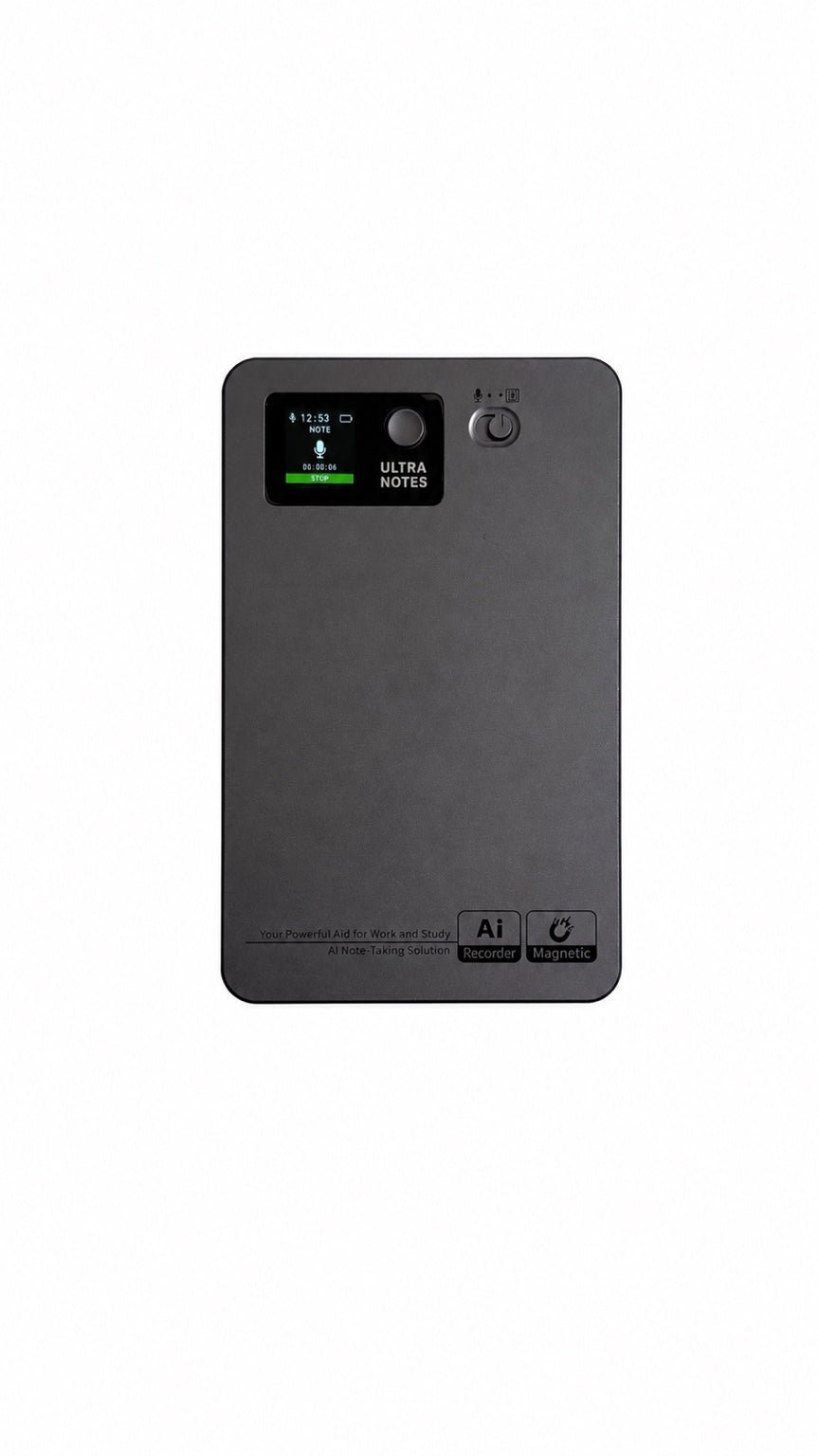
Check whether NERALVO Halo fits apprentices work can support permitted training notes, private post-task reflections and evidence reminders. It includes NOTE mode, supported CALL capture, 64GB local storage, up to 35 hours of recording and Bluetooth sync with DOWAY. DOWAY can create transcripts, summaries, speaker-separated notes, templates, translations, mind maps and exportable files, with one year of DOWAY Max included from activation.
Halo is not safety equipment, an e-portfolio, an assessor or proof of competence. Employer and provider approval remains essential.
Apprenticeship-note quality check
- Was the task safely complete before recording?
- Does the note state the apprentice’s personal contribution?
- Are safety controls and technical details verified?
- Is reflection kept separate from observed competence?
- Does every evidence item genuinely exist?
- Was witness evidence confirmed by the witness?
- Does the current assessment plan accept the proposed method?
- Is confidential workplace information protected?
- Has the authorised portfolio or training record been updated?
A strong apprenticeship note preserves authentic learning, points to genuine evidence and leaves competence decisions with the approved assessment process.
Cloud software, a dedicated recorder or manual notes?
For Apprentices, the right answer changes with the setting. This matrix deliberately gives each method a situation where it can be the strongest choice.
| Situation | Best starting point | Reason |
|---|---|---|
| scheduled remote meetings | Cloud meeting software | Calendar automation and shared integrations are usually the strongest advantage. |
| in-person or mobile work | Dedicated recorder | Independent capture reduces reliance on an active phone or laptop. |
| recording is refused or prohibited | Manual notes or an approved alternative | The boundary takes priority over convenience. |
| mixed online and offline work | Governed hybrid | Use each method only in the setting it actually fits. |
Related AI voice recorder guides
See the guides for field service technicians, builders, corporate trainers and private tutors.
Related guides
Profession workflow
Visual map for AI Voice Recorder for Apprentices: Toolbox Learning, Training Notes and Evidence Capture
- Prepare the approved useDefine purpose, safe position, permission and the required formal record.
- Capture context firstState the case, asset, person, location or event identifier before detail.
- Human-verify evidenceCheck technical terms, units, names, dates, decisions and uncertainty.
- Complete the formal recordTransfer only verified information and apply access and retention controls.
On this page
Related guides
See whether Halo fits this workflow
Review the NERALVO Halo specifications, included services, delivery information and current offer only after completing the guide.
Found an error or an out-of-date claim? Email support@neralvo.com with the article address and a supporting source.