The 60-second verdict
Quick answer: architects can use an AI voice recorder to preserve client priorities, design options, coordination issues and review actions, but a discussion, preference, approval, instruction and released drawing are different states. The controlled model, drawing and project systems remain authoritative.
Best fit: Architects who need recoverable audio and human-verified notes in an authorised workflow. Use another method when: recording is prohibited, a participant declines or the approved process requires manual notes.
Evidence basis and limits
- Decision factors covered: Why design conversations become uncontrolled changes; The brief → intent → option → coordination → approval → change → release workflow; Anchor every review to versions.
- Evidence rule: A claim earns weight only when the source, date, configuration and limitation are clear enough for a reader to check.
- Boundary: Examples and workflow recommendations must be tested with representative recordings, the intended users and the actual approval process before rollout.

Assess Halo against the architects workflow matrix can support approved design reviews and site debriefs. It cannot issue instructions, approve design or update controlled information.
Why design conversations become uncontrolled changes
A client may prefer an option, a contractor may suggest a detail and a consultant may identify a coordination issue. An AI summary can make all three sound approved. If someone acts on that wording before formal review, the project baseline fragments.
The brief → intent → option → coordination → approval → change → release workflow
| Stage | Question | Output |
|---|---|---|
| Brief | What outcome, constraint and priority apply? | Agreed requirement |
| Intent | What principle should the design achieve? | Rationale |
| Option | Which alternatives and trade-offs exist? | Comparative decision |
| Coordination | Which disciplines, interfaces and regulations are affected? | Impact record |
| Approval | Who may accept the option and conditions? | Authorised decision |
| Change | What controlled information must be revised? | Change action |
| Release | Which model, drawing or specification is current? | Baseline |
Anchor every review to versions
- Project and package.
- Meeting purpose and stage.
- Drawing, model or specification reference.
- Revision and date.
- Area, room, element or interface.
- Participants and decision authority.
“Use the latest drawing” is not a stable instruction.
Use decision-status labels
- Client aspiration.
- Design option.
- Architect recommendation.
- Consultant comment.
- Contractor proposal.
- Approved subject to coordination.
- Formal instruction.
- Issued for information.
- Issued for construction or equivalent controlled status.
Preserve design intent
Record the user outcome, spatial requirement, performance need, aesthetic principle, heritage or planning context, accessibility need, cost and programme constraint. This allows future teams to understand why a detail exists, not only what was drawn.
Review coordination impacts
| Interface | Questions |
|---|---|
| Structure | Load, opening, tolerance and sequence |
| Building services | Routes, access, controls and maintenance |
| Envelope | Weather, thermal, fire and junction performance |
| Interiors | Clearance, accessibility, finishes and equipment |
| Planning and heritage | Consent, conditions and material change |
| Construction | Buildability, temporary condition and information need |
| Operations | Use, cleaning, replacement and lifecycle |
Control client approvals
State exactly what is being approved, the information reviewed, options rejected, cost and programme assumptions, unresolved coordination, conditions, decision-maker and whether further formal approval is required.
Turn site discussion into controlled action
Capture the exact location, current requirement, observed condition, proposal, safety or quality impact, design review required, authority and affected documents. Do not let a transcript become a site instruction.
Close the change loop
- Record request or issue.
- Assess design, compliance, cost and programme impact.
- Coordinate affected disciplines.
- Obtain approval.
- Update drawings, model, schedules and specifications.
- Issue through the controlled process.
- Withdraw or supersede old information.
- Verify implementation and as-built record.
Protect project and client information
Design recordings can contain confidential client needs, security arrangements, supplier details and personal data. Use approved accounts, restrict project search and apply retention to source audio separately from formal project records.
How NERALVO Halo fits architects
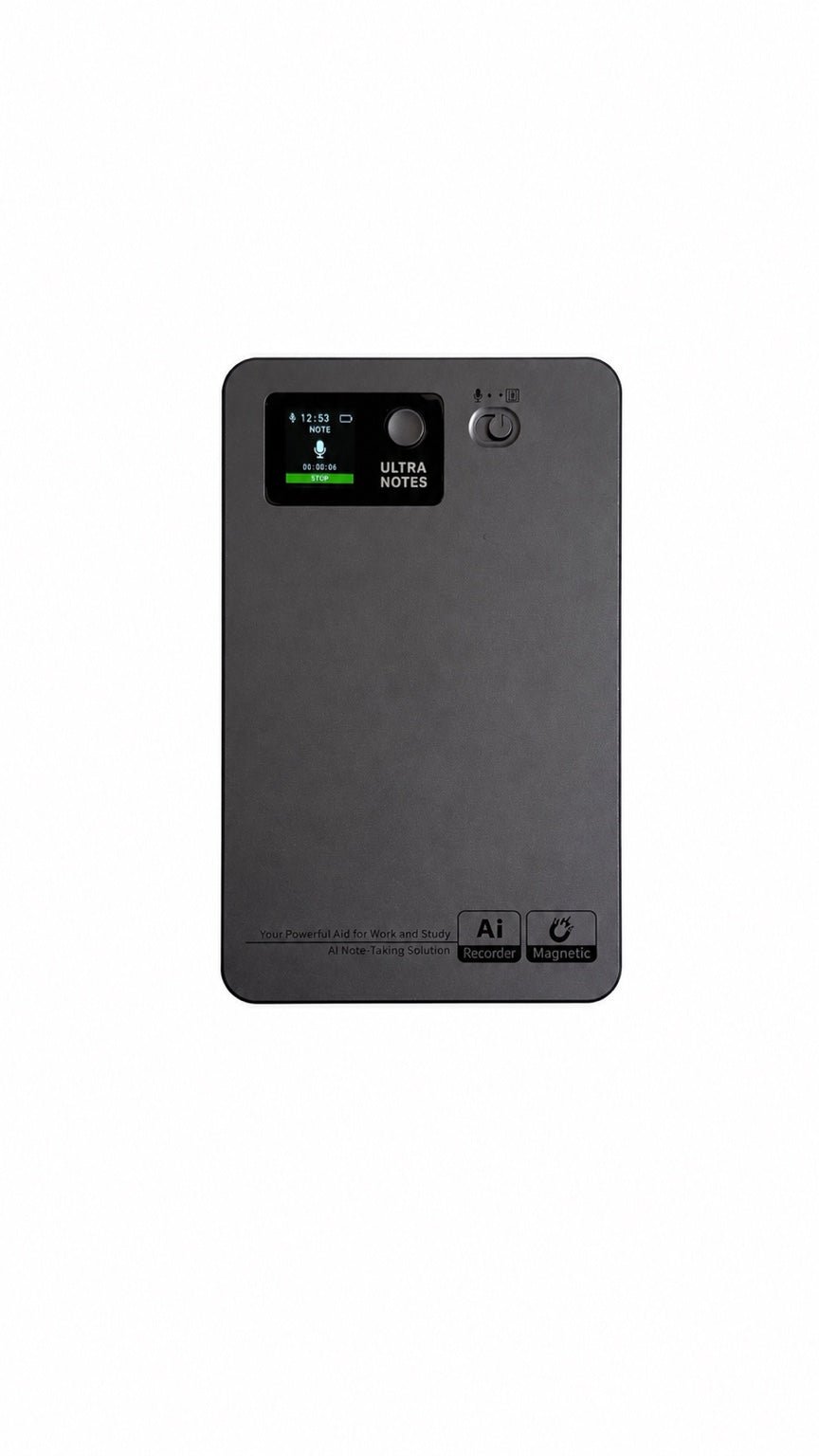
NERALVO Halo includes NOTE mode, supported CALL mode, 64GB local storage, up to 35 hours of recording and Bluetooth sync with DOWAY. DOWAY provides transcripts, summaries, speaker-separated notes, templates, translations, mind maps and exports, with one year of DOWAY Max included. The accountable architect and controlled project systems determine what is approved and issued.
Cloud software, a dedicated recorder or manual notes?
For Architects, the right answer changes with the setting. This matrix deliberately gives each method a situation where it can be the strongest choice.
| Situation | Best starting point | Reason |
|---|---|---|
| scheduled video briefings | Cloud meeting software | Auto-join and central collaboration can remove routine admin. |
| site visits, inspections or mobile calls | Dedicated recorder | Dedicated hardware suits movement, variable rooms and offline source capture. |
| a restricted site or participant prevents recording | Manual notes or an approved alternative | A clear alternative respects policy and participant choice. |
| office-to-site work | Governed hybrid | One governed process prevents gaps between desk and field work. |
Frequently asked questions
Does a client saying “I like this option” count as approval?
No. Record preference separately from the formal approval required by the project.
Can AI update drawings from a meeting?
It may help identify changes, but competent review and controlled revision are required.
Can a site transcript be treated as an instruction?
No. Use the authorised contractual and project process.
Final architectural checklist
- Project and revision anchored.
- Brief and design intent explicit.
- Options and trade-offs visible.
- Coordination impacts assigned.
- Preference separated from approval.
- Authority and conditions clear.
- Controlled information updated and issued.
- Old versions withdrawn and implementation checked.
Bottom line: a strong architectural voice note preserves the reason and status behind a design choice while ensuring only controlled information directs the work.
Related guides
See the guides for building surveyors, civil engineers and engineering managers.
On this page
Related guides
See whether Halo fits this workflow
Review the NERALVO Halo specifications, included services, delivery information and current offer only after completing the guide.
Found an error or an out-of-date claim? Email support@neralvo.com with the article address and a supporting source.