Reviewed and strengthened: 5 August 2026.
The 60-second verdict
Quick answer: assess an AI recorder as a complete service, not a microphone. Review the hardware, firmware, mobile app, accounts, transcription and summarisation models, storage, subprocessors, support access, exports, deletion, contracts and supplier-exit process. Require evidence and a controlled pilot before approval.
Best fit: buyers willing to test the complete capture-to-export workflow. Avoid: choosing from price, advertised accuracy or AI features without checking allowance, correction effort and exit options.
Quick verdict: buy the workflow, not only the device. Vague promises about security, privacy or AI accuracy are not enough. A supplier should be able to explain the full data flow, prove its controls and support a practical exit.
Evidence basis and limits
- Decision factors covered: 1. Define the intended use before comparing products; 2. Map the complete product chain; 3. Request evidence, not marketing statements.
- Evidence rule: The decision is based on the complete capture-to-action workflow, not a single feature or marketing accuracy percentage.
- Boundary: Examples and workflow recommendations must be tested with representative recordings, the intended users and the actual approval process before rollout.
This guide provides general procurement information. Privacy, security, legal, records-management, safeguarding, accessibility and sector specialists should adapt it to the intended use.
1. Define the intended use before comparing products
Supplier evaluation becomes unreliable when the organisation has not decided what the recorder will be used for. Document:
- Approved and prohibited recording contexts.
- Who may be recorded and whether vulnerable people are involved.
- Likely sensitivity of conversations.
- Expected users, recording frequency and file volumes.
- Typical recording length, battery and local-storage requirements.
- Languages, accents and specialist vocabulary.
- Required transcript, summary and export formats.
- Accessibility needs.
- Retention, deletion and audit requirements.
- User, supplier and data locations.
- Support, continuity and recovery expectations.
A product can be suitable for routine internal meetings but unsuitable for confidential legal, clinical, safeguarding or employment work. Approval should be tied to a defined use case rather than the device generally.
2. Map the complete product chain
| Layer | Questions to answer | Evidence |
|---|---|---|
| Hardware | Who manufactures it, what is stored locally, how is access controlled and what happens if it is lost? | Specification, loss procedure and lifecycle policy. |
| Firmware | How are updates signed, delivered and supported? | Update and vulnerability policy. |
| Mobile app | Which permissions are required, what is cached and which operating systems are supported? | Permission list and support matrix. |
| Accounts | What authentication, roles, sessions and offboarding controls exist? | Admin guide and access-control evidence. |
| AI processing | Which systems process audio and text, and is customer content reused? | Model-use statement and contract terms. |
| Storage and backups | Where are primary, backup, log and support copies held and for how long? | Data-flow and deletion documentation. |
| Subprocessors | Who supports the service, what do they do and where do they process data? | Current subprocessor list and change-notice process. |
3. Request evidence, not marketing statements
- Current data-flow or architecture description.
- Security policies and independent assurance where available.
- Vulnerability-management and penetration-testing summaries.
- Encryption and key-management information.
- Authentication, support-access and logging controls.
- Incident-response and customer-notification commitments.
- Subprocessor and international-transfer information.
- Retention, deletion and backup documentation.
- Business-continuity and disaster-recovery evidence.
- Service availability and support targets.
- Product and firmware lifecycle policy.
- Export formats and migration documentation.
- Contract terms that match the procurement answers.
Record the document name, version, date received, owner and review outcome. An assurance report that expired before the product was launched should not be treated as current evidence.
4. Security checklist
- Encryption in transit and at rest.
- Strong authentication and least-privilege access.
- Administrative roles and rapid user offboarding.
- Logging of sign-in, support, export, sharing and deletion activity.
- Secure firmware and app updates.
- Vulnerability disclosure and remediation targets.
- Lost-device and compromised-account procedures.
- Tenant separation and support-access controls.
- Backup protection and tested recovery.
- Incident notification and cooperation.
Ask the supplier to demonstrate important controls during the pilot. A policy statement is stronger when the organisation can observe the related setting or workflow.
5. Privacy and data-protection checklist
- Controller, processor and any independent-controller roles are accurate.
- Purposes and documented instructions are specific.
- The service is suitable for the expected data categories.
- Subprocessor approval or change notification is workable.
- Processing locations and transfer safeguards are transparent.
- Rights-request assistance is practical.
- Live-system deletion and backup expiry are documented.
- Customer audio and transcripts are not reused incompatibly.
- A suitable data processing agreement is available.
- Retention can be configured to match the organisation’s policy.
6. AI-specific questions
- Are audio, transcripts, prompts, corrections or summaries used to train, evaluate or improve models?
- Can that use be disabled technically and contractually?
- Does the service infer sentiment, emotion, identity, risk or other characteristics?
- Can generated statements be traced back to transcript or audio?
- How are model and feature changes communicated?
- What limitations exist for accents, noise, overlapping speech, names, numbers and specialist terms?
- Are AI outputs clearly presented as drafts requiring human verification?
- Are model providers included in the subprocessor chain?
7. Run a controlled pilot with pass and fail criteria
| Test area | What to test | Example pass criterion |
|---|---|---|
| Capture reliability | Quiet room, larger room, movement, distance and multiple speakers. | No unexplained loss of the source recording. |
| Critical-detail accuracy | Names, dates, amounts, deadlines, acronyms and specialist terms. | Errors can be located and corrected efficiently against audio. |
| Workflow | Transfer, edit, export, share and deletion. | Approved formats work without uncontrolled copies. |
| Failure recovery | Interrupted sync, full storage, expired session and unavailable app. | Users can recover safely without losing or duplicating records. |
| Access control | Wrong-user access, offboarding and shared-device scenarios. | Former and unauthorised users cannot reach content. |
| Accessibility | App navigation, text scaling, contrast, keyboard or assistive-technology use. | Target users can complete the approved workflow. |
Use non-sensitive or controlled data first. Define critical errors that automatically fail the pilot before testing begins.
8. Review contracts, support and continuity
Check service scope, data obligations, ownership, prohibited reuse, subprocessors, incidents, support access, deletion, audit evidence, liability, price changes, feature withdrawal and end-of-life notice. Confirm:
- What remains usable during an app or supplier outage.
- Which export formats preserve source audio and editable text.
- How long data remains available after cancellation.
- How accounts and devices are reassigned.
- What support channels and response targets apply.
- What happens if the supplier closes or changes the service materially.
9. Test supplier-exit readiness before approval
- Export source audio and editable transcripts.
- Confirm exports open without the supplier app.
- Remove a test user and verify access ends.
- Delete a recording and identify any remaining copies.
- Close a test account where practical.
- Record backup-expiry and final-deletion commitments.
- Confirm who owns migration and the expected timescale.
A download button alone does not prove portability. The organisation needs usable files, complete metadata where required and enough time to migrate.
10. Use approval gates rather than an average score alone
A weighted score helps compare suppliers, but some failures should block approval regardless of the total. Suggested mandatory gates include:
- Clear processor terms.
- Known processing locations and subprocessors.
- No unexplained model-training use.
- Usable individual-record deletion.
- Prompt incident notification.
- Export of source audio and editable text.
- A pilot that passes critical-detail accuracy and reliability tests.
- A workable account-offboarding and supplier-exit route.
Supplier scorecard
| Category | Suggested weight | Evidence |
|---|---|---|
| Security | 20% | Controls, testing and assurance. |
| Privacy and contracts | 20% | Data flow, DPA, locations and subprocessors. |
| Recording and AI quality | 20% | Controlled pilot results. |
| Usability and accessibility | 15% | Representative user testing. |
| Support and continuity | 15% | SLA, outage and recovery evidence. |
| Cost and exit | 10% | Whole-life cost, portability and migration. |
Evaluating NERALVO Halo
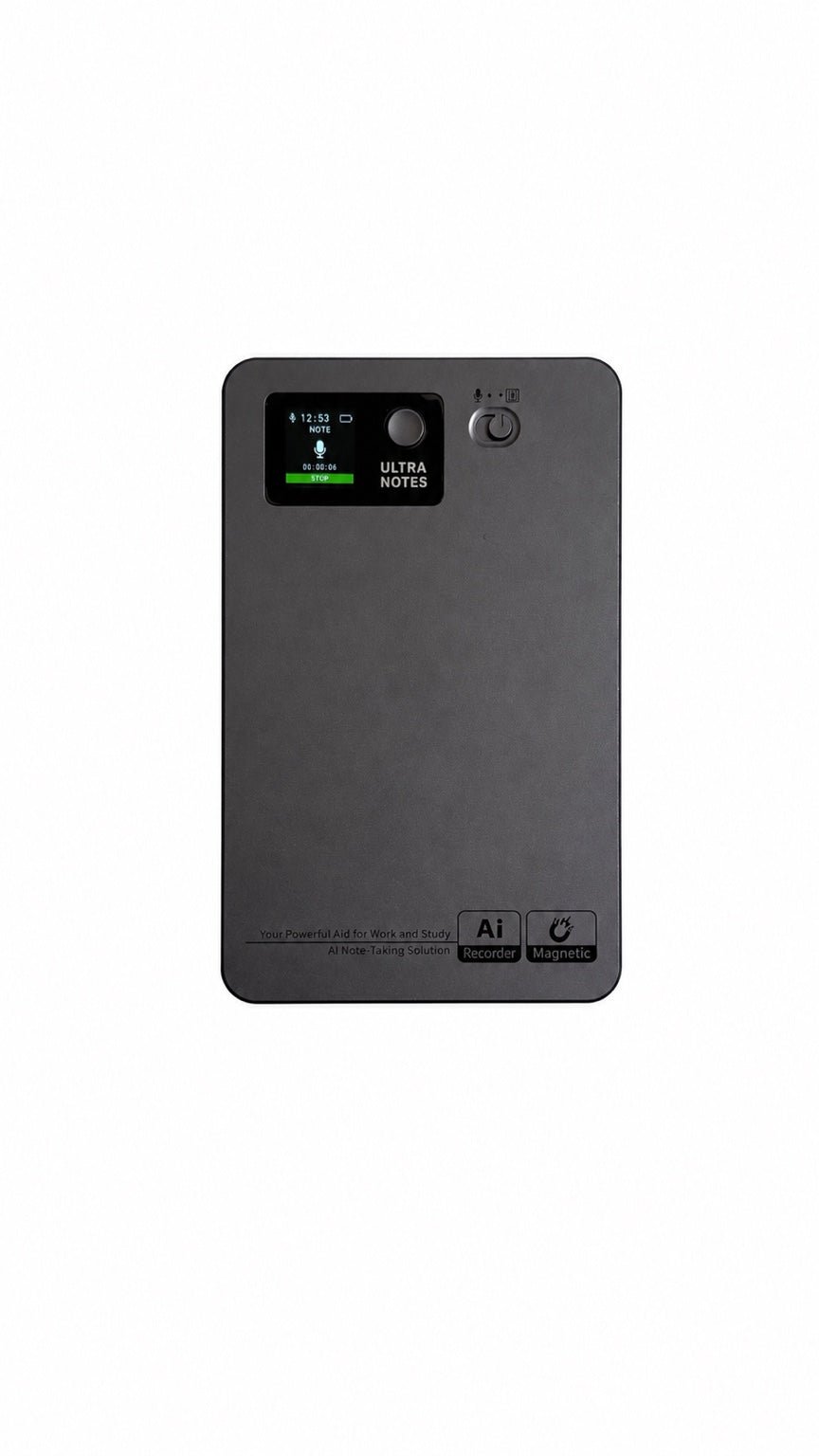
View Halo specifications and verify the buying gates provides 64GB local storage, up to 35 hours of recording, NOTE mode, supported CALL mode, Bluetooth synchronisation with DOWAY, and AI transcription, summaries, templates, translation, mind maps and exports. One year of DOWAY Max access is included.
Professional buyers should assess Halo hardware and the complete DOWAY workflow against their own privacy, security, accuracy, retention, accessibility and contractual requirements. CALL recording must be supported, lawful, disclosed where required and permitted by the relevant phone, app, employer and jurisdiction.
Ongoing supplier monitoring
Approval should not be permanent. Reassess after:
- A material model or feature change.
- A new subprocessor or processing country.
- A security incident.
- A change to training or analytics use.
- A major app, firmware or operating-system update.
- A price, retention or deletion change.
- A new organisational use case.
- Repeated transcript or reliability failures.
Workflow choice matrix for AI Recorder Supplier Due Diligence
Choose the method that protects the source and reduces downstream correction. The table makes the non-hardware options explicit.
| Condition | Preferred route | Why |
|---|---|---|
| Repeatable remote work with approved integrations | Cloud software | Automation and central collaboration may outweigh device independence. |
| In-person, mobile or unreliable-connectivity work | Dedicated recorder | Independent capture and a recoverable local source are usually more resilient. |
| Recording is refused, prohibited or unnecessary | Manual notes / no recording | Respecting the boundary is the correct workflow, not a product failure. |
| High-risk or mixed work | Governed hybrid | Separate capture, review, approval and retention rather than trusting one tool. |
Frequently asked questions
Is a privacy policy enough?
No. Procurement also needs contracts, technical evidence, data-flow information, configuration review, operational testing and a documented approval decision.
Who should participate?
Representative users, procurement, privacy, information security, legal, records management and the accountable business owner. Regulated or sensitive uses may require safeguarding, clinical-safety, equality or professional specialists.
What should automatically block approval?
Missing processor terms, unclear model-training use, unknown processing locations, unsupported deletion claims, no usable export path, no incident commitment or failure of a critical pilot criterion should block approval until resolved.
Related guides
- How to Choose an AI Voice Recorder for Transcript Export
- AI Voice Recorder Privacy Checklist: 30 Questions Before You Record
- Voice Recording Risk Assessment: A Step-by-Step Guide
- Data Processing Agreements for AI Transcription: What to Review
Final buying checklist
- The intended and prohibited uses are documented.
- The complete hardware, app, model and subprocessor chain is mapped.
- Security and privacy claims have current evidence.
- AI training, inference and model-change questions are answered.
- A controlled pilot passed pre-defined criteria.
- Accessibility and user workflow have been tested.
- Contract, deletion, support and exit terms are acceptable.
- Mandatory approval gates have passed.
- An accountable owner and reassessment date are recorded.
Bottom line: strong due diligence reduces the chance that a convenient recorder becomes an unmanaged security, privacy, accuracy, accessibility or continuity risk.
Fair comparison flow
Visual map for AI Recorder Supplier Due Diligence: A Buyer’s Checklist
- Set must-have gatesDefine capture, privacy, recovery, compatibility and cost requirements.
- Use the same evidenceCompare identical recordings, settings, dates and decision criteria.
- Expose trade-offsShow where each option wins, fails or remains unverified.
- Choose for the workflowSelect only after deal-breakers and total ownership cost are clear.
On this page
Related guides
See whether Halo fits this workflow
Review the NERALVO Halo specifications, included services, delivery information and current offer only after completing the guide.
Found an error or an out-of-date claim? Email support@neralvo.com with the article address and a supporting source.