The 60-second verdict
Quick answer: draft a consultation response by linking each material theme to source evidence, affected groups, decision criteria, assessment, response status, reasoning and a specific change or follow-up. Frequency alone should not decide the outcome, and minority, accessibility and safety impacts must remain visible.
Decision focus: use the method below only where it produces a recoverable source, a verifiable output and a clear next action. If one of those fails, change the workflow rather than trusting a polished summary.
Evidence basis and limits
- Decision factors covered: Define the consultation record; Separate feedback types; Build a transparent response table.
- Evidence rule: The decision is based on the complete capture-to-action workflow, not a single feature or marketing accuracy percentage.
- Boundary: Examples and workflow recommendations must be tested with representative recordings, the intended users and the actual approval process before rollout.
A consultation response loses credibility when it reports only the most common comments or implies that every contribution produced a change. Recording can improve accuracy where the consultation process permits it, but the final judgement remains accountable and human-led.

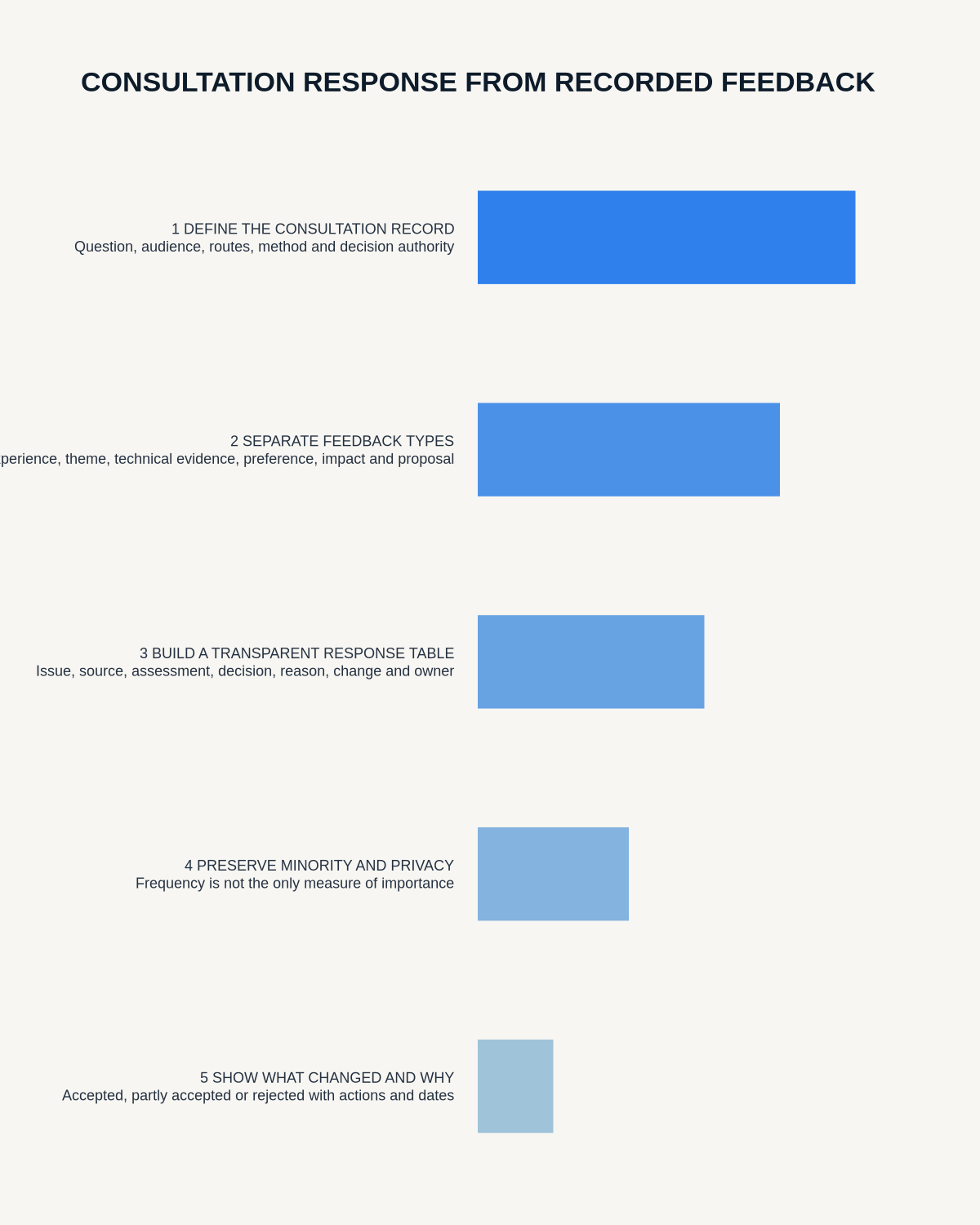
Define the consultation record
State the question, audience, participation routes, recording arrangements, analysis method and decision authority. Explain how written responses, interviews, workshops and spoken feedback will be combined.
Separate feedback types
- Individual experience
- Repeated theme
- Technical or professional evidence
- Preference or value judgement
- Accessibility, safety or equality impact
- Implementation concern
- Alternative proposal
These categories should not receive automatic equal or frequency-based weight.
Create a source-controlled coding process
Develop clear theme definitions and test them on a sample. Record source, participant group, context and uncertainty. Use a second reviewer for material or contested themes where appropriate.
Build a transparent response table
- Clear issue or proposal
- Source-linked evidence and limitations
- Affected groups
- Technical, operational or policy assessment
- Accepted, partly accepted or not accepted status
- Reason
- Specific change, owner and timing
Do not rely on vote-counting
A less frequent response may identify a serious accessibility, safety or implementation effect. Explain how evidence quality, affected groups, feasibility and decision criteria were considered. Preserve material minority and dissenting views.
Protect contributor context and privacy
Use anonymised or aggregated evidence unless attribution was agreed and necessary. Verify important quotations against audio. Remove unrelated personal information and restrict raw recordings.
Show what did not change
A credible response explains rejected and partly accepted proposals and the evidence behind the decision. Avoid language implying that every comment produced a policy or design change.
Quality-check before publication
- Confirm every material theme is traceable.
- Check contrasting views are represented fairly.
- Verify quotations, figures and affected groups.
- Review accessibility and plain language.
- Assign actions, owners and dates.
- Obtain required technical and governance approvals.
Workflow choice matrix for How to Draft a Consultation Response from Recorded Feedback
Choose the method that protects the source and reduces downstream correction. The table makes the non-hardware options explicit.
| Condition | Preferred route | Why |
|---|---|---|
| High-risk or mixed work | Governed hybrid | Separate capture, review, approval and retention rather than trusting one tool. |
| Recording is refused, prohibited or unnecessary | Manual notes / no recording | Respecting the boundary is the correct workflow, not a product failure. |
| In-person, mobile or unreliable-connectivity work | Dedicated recorder | Independent capture and a recoverable local source are usually more resilient. |
| Repeatable remote work with approved integrations | Cloud software | Automation and central collaboration may outweigh device independence. |
Frequently asked questions
Should the most common answer automatically win?
No. Frequency matters, but evidence quality, affected groups, safety, accessibility and feasibility also matter.
Can direct quotations be published?
Only where the process permits it and the wording has been checked.
Must every suggestion cause a change?
No. The response should explain why material proposals were accepted, partly accepted or rejected.
Useful resources
- UK government consultation principles
- AI Voice Recorder for Community Engagement Officers
- AI Voice Recorder for Transport Planners
- How to Create Accessible Meeting Notes
Final response checklist
- Participation routes and methods clear
- Feedback types separated
- Material themes traceable
- Minority impacts preserved
- Reasons for decisions transparent
- Changes have owners and dates
On this page
More in this topic: Recording governance and quality
Show 7 closely related guides
- How to Review AI Transcripts Before They Enter Business Systems
- What to Do When Someone Refuses to Be Recorded
- How to Create an AI Voice Recording Quality Scorecard
- How to Run a Voice Recording DPIA Workshop
- How to Create a Voice Recording Exception and Escalation Process
- How to Train Staff to Use AI Voice Recorders Responsibly
- How to Build an Approved-Use Matrix for Voice Recording
Related guides
See whether Halo fits this workflow
Review the NERALVO Halo specifications, included services, delivery information and current offer only after completing the guide.
Found an error or an out-of-date claim? Email support@neralvo.com with the article address and a supporting source.