The 60-second verdict
Quick answer: HVAC engineers can use an AI voice recorder for safe post-task notes by keeping the asset, symptom, operating condition, measurement, intervention and final status connected. Every value, unit, setpoint and diagnosis must be verified against instruments and controlled records.
Best fit: HVAC Engineers who need recoverable audio and human-verified notes in an authorised workflow. Use another method when: recording is prohibited, a participant declines or the approved process requires manual notes.
Evidence basis and limits
- Decision factors covered: Start with asset and work status; Use a test-result sequence; Separate customer report from diagnosis.
- Evidence rule: Claims are weighted by consequence: capture failure, changed meaning, access and recovery matter more than polished wording.
- Boundary: Examples and workflow recommendations must be tested with representative recordings, the intended users and the actual approval process before rollout.
HVAC service visits generate many details that can easily become detached from the correct unit. The recorder can reduce reconstruction, but it cannot replace safe isolation, commissioning sheets, certificates or competent engineering judgement.

Start with asset and work status
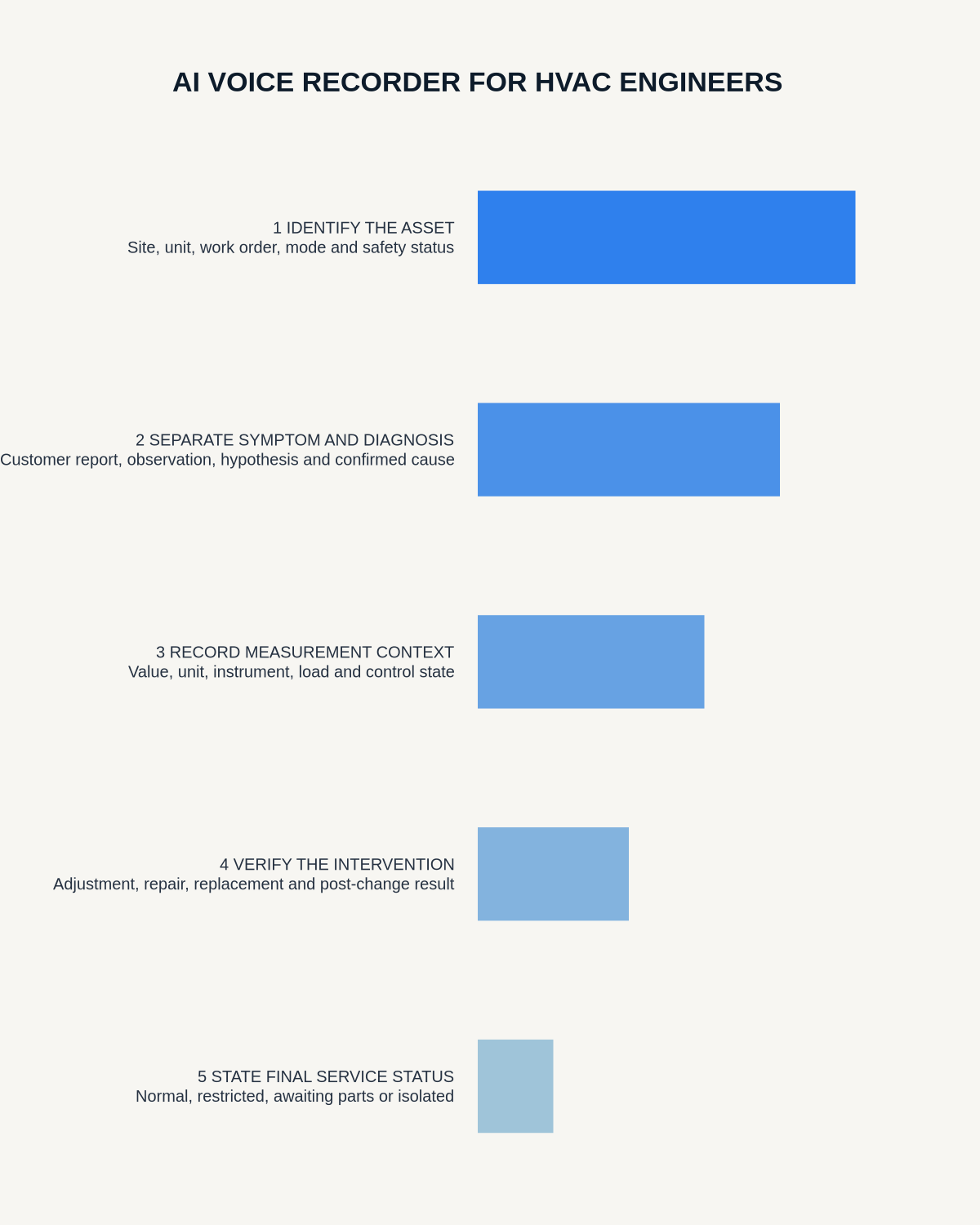
State the site, system, unit, asset number, work order, operating mode, reported complaint and current safety or isolation status. Repeat the asset identifier when moving to another unit.
Use a test-result sequence
- Reported symptom: user or monitoring-system report.
- Observed condition: direct finding.
- Measurement: value, unit, instrument and operating condition.
- Expected reference: design range or manufacturer source.
- Intervention: repair, adjustment, replacement or authorised change.
- Post-change result: repeated test and functional check.
- Status: normal, restricted, awaiting action or isolated.
Separate customer report from diagnosis
Keep reported symptoms, observations, hypotheses and confirmed diagnosis in separate fields. Where the cause remains uncertain, preserve alternatives and record the next test.
Protect values, units and setpoints
Verify temperatures, pressures, flow rates, electrical readings, timings and setpoints against instruments, worksheets and control records. The transcript must not be the only source for a critical value.
Record test conditions
State operating mode, load, relevant environmental conditions, control state and time since start-up or adjustment. Link photographs, trend logs and instrument files using clear references.
Control commissioning evidence
Move balancing data, alarm tests, control sequences, approved setpoints, acceptance results and unresolved deviations into the commissioning record. Separate a proposed value from the one actually authorised and entered.
Make final status unmistakable
End with one clear state: returned to normal service, operating with restriction, awaiting parts or specialist action, or isolated. Give every unresolved issue an owner, deadline and interim control.
Safe service-note workflow
- Complete immediate safety and isolation steps.
- Move to a stable position.
- State asset, work order and status.
- Capture symptom, evidence, test, intervention and result.
- Correct technical terms, values and units.
- Verify against instruments and controlled documents.
- Update the service or commissioning system.
- Confirm equipment status and handover.
- Assign unresolved actions.
- Delete temporary audio under policy.
Cloud software, a dedicated recorder or manual notes?
For HVAC Engineers, the right answer changes with the setting. This matrix deliberately gives each method a situation where it can be the strongest choice.
| Situation | Best starting point | Reason |
|---|---|---|
| scheduled video briefings | Cloud meeting software | Calendar automation and shared integrations are usually the strongest advantage. |
| site visits, inspections or mobile calls | Dedicated recorder | Independent capture reduces reliance on an active phone or laptop. |
| a restricted site or participant prevents recording | Manual notes or an approved alternative | The boundary takes priority over convenience. |
| office-to-site work | Governed hybrid | Use each method only in the setting it actually fits. |
Frequently asked questions
Can AI confirm an HVAC fault?
No. Diagnosis should follow inspection, testing and approved evidence.
Can transcript values be copied into commissioning records?
Only after each value and unit has been checked against its source.
Should an engineer record beside moving plant?
No. Recording must never distract from machinery, electrical or site safety.
Useful resources
- HSE electrical-safety guidance
- AI Voice Recorder for Lift Engineers
- AI Voice Recorder for Maintenance Engineers
- Check whether NERALVO Halo fits hvac engineers work
Final service checklist
- Correct asset identified
- Symptoms separated from diagnosis
- Measurements and conditions verified
- Pre- and post-change evidence clear
- Final status explicit
- Outstanding actions owned
On this page
More in this topic: Field recording, setup and troubleshooting
Show 8 closely related guides
- AI Voice Recorder for Solar Installers: Roof Surveys, Design Changes and Handover Notes
- AI Voice Recorder for Lift Engineers: Safer Fault Reports and Clearer Handover
- AI Voice Recorder for Plumbers: Customer Faults, Site Surveys and Job Notes
- How Automotive Technicians Can Capture Intermittent Faults Accurately
- How to Prevent Bluetooth and App Interruptions During Recording
- How Much Storage Does an AI Voice Recorder Need? A Practical Formula
- How to Use an AI Voice Recorder with a Phone Case or Magnetic Mount
- How to Position an AI Voice Recorder on Different Table Shapes
Related guides
See whether Halo fits this workflow
Review the NERALVO Halo specifications, included services, delivery information and current offer only after completing the guide.
Found an error or an out-of-date claim? Email support@neralvo.com with the article address and a supporting source.