The 60-second verdict
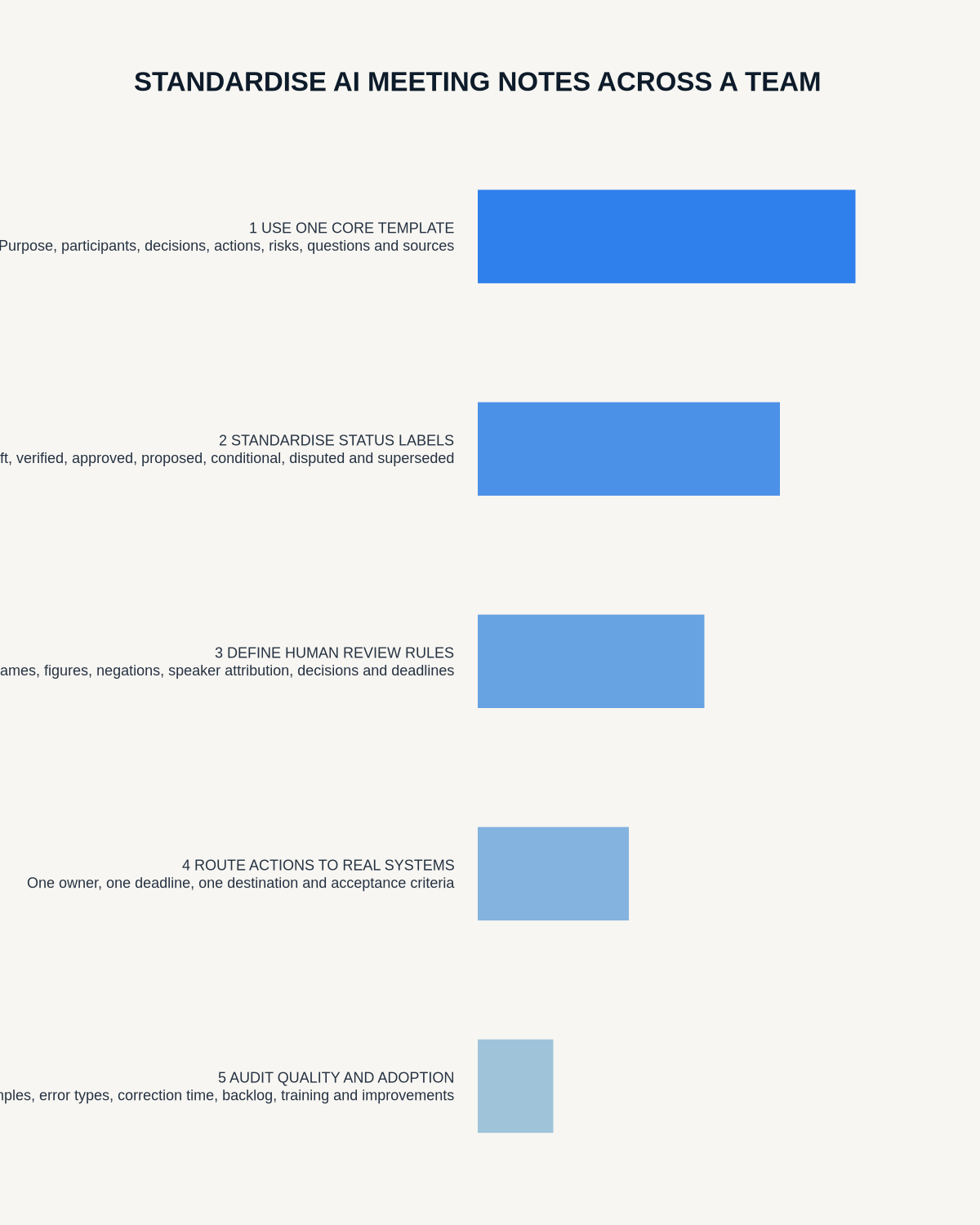
Quick answer: standardise AI meeting notes by defining a small universal core, creating templates for different meeting purposes, using controlled labels for decisions and actions, and requiring human approval before information enters business systems. Standardisation should make important information easier to find without making every note sound identical.
Decision focus: use the method below only where it produces a recoverable source, a verifiable output and a clear next action. If one of those fails, change the workflow rather than trusting a polished summary.
Evidence basis and limits
- Decision factors covered: Define the universal core; Create templates for different meeting purposes; Use controlled status labels.
- Evidence rule: Claims are weighted by consequence: capture failure, changed meaning, access and recovery matter more than polished wording.
- Boundary: Examples and workflow recommendations must be tested with representative recordings, the intended users and the actual approval process before rollout.

Define the universal core
Every approved meeting note should show the information a reader needs to act confidently:
- meeting purpose, date and participants;
- recording or source reference where applicable;
- decision status and authority;
- actions with one accepted owner and deadline;
- open questions, risks and dependencies;
- source or evidence references;
- confidentiality and access status;
- author, reviewer and approval state.
Create templates for different meeting purposes
Use the universal core inside purpose-specific templates rather than forcing one form onto every conversation.
- Operational review: status, blockers, risks and actions.
- Client meeting: needs, commitments, conditions and next contact.
- Decision meeting: options, evidence, authority, rationale and review trigger.
- Interview: attributed statements, quotations and follow-up.
- Incident review: chronology, evidence, controls and lessons.
- Workshop: assumptions, proposals, conflicts and unresolved questions.
Use controlled status labels
Words such as discussed, proposed, recommended, approved, conditional, deferred, rejected and superseded should have agreed meanings. This prevents an AI summary from turning an idea into a decision or an unaccepted task into an assignment.
| Label | Meaning | Required evidence |
|---|---|---|
| Proposed | Raised for consideration | Speaker and context |
| Approved | Authorised decision | Decision-maker and conditions |
| Action | Accepted work | Owner, deliverable and date |
Define what never enters the final note automatically
- unverified speaker identity;
- AI inference presented as fact;
- private side conversation without a justified purpose;
- unsupported legal, technical or professional conclusions;
- unconfirmed action ownership;
- unnecessary personal information;
- draft wording that conflicts with the source audio.
Build a risk-based human quality gate
Before approval, check names, organisations, figures, dates, negative wording, decisions, conditions, owners, deadlines, uncertainty, dissent, confidentiality, destination and transcript version. High-impact meetings should receive deeper source replay and may require a second reviewer.
Use How to Review AI Transcripts Before They Enter Business Systems as the detailed review route.
Route outputs into the correct systems
Tasks should move into the task system, risks into the risk register and formal decisions into the approved decision record. The meeting note provides context; it should not become a hidden substitute for project, case or customer management.
Measure consistency and usefulness
Track correction time, missing actions, wrong owners, unsupported decisions, template exceptions, user effort and downstream corrections. Review results by meeting type because an interview and an operational review have different quality needs.
Maintain version control
Give every template a version, owner, approval date and review trigger. Remove fields that remain unused, add controls where errors repeat and retire unofficial variants. Provide one good completed example for each template family.
Workflow choice matrix for How to Standardise AI Meeting Notes Across a Team
Choose the method that protects the source and reduces downstream correction. The table makes the non-hardware options explicit.
| Condition | Preferred route | Why |
|---|---|---|
| Repeatable remote work with approved integrations | Cloud software | Automation and central collaboration may outweigh device independence. |
| In-person, mobile or unreliable-connectivity work | Dedicated recorder | Independent capture and a recoverable local source are usually more resilient. |
| Recording is refused, prohibited or unnecessary | Manual notes / no recording | Respecting the boundary is the correct workflow, not a product failure. |
| High-risk or mixed work | Governed hybrid | Separate capture, review, approval and retention rather than trusting one tool. |
Frequently asked questions
Should every meeting use the same template?
No. Use one universal core with a template matched to the meeting purpose.
Does standardisation mean identical wording?
No. Standardise labels, evidence, accountability and destination rather than filler prose.
Where should actions be stored?
In the team's controlled task or project system, with the meeting note linked for context.
Who should own the standard?
A named process owner should control templates, examples, changes, training and quality review.
Can AI approve the final note?
No. AI may draft and organise content, but an accountable person must verify meaning and approve the business record.
Authoritative guidance and related reading
- The National Archives information-management guidance
- How to Assign Ownership for Recordings, Transcripts and Summaries
- How to Pilot an AI Voice Recorder with a Small Team
Final team-standard checklist
- Universal core defined
- Purpose-specific templates approved
- Status labels controlled
- Human quality gate documented
- Operational records updated
- Template versions governed
- Quality measured and reviewed
On this page
More in this topic: Meeting capture and follow-up workflows
Show 6 closely related guides
- How to Test CALL Mode Before an Important Conversation
- How to Choose One AI Voice Recorder for Calls and Meetings
- AI Voice Recorder for Transcript Export: Portability and File Test
- AI Voice Recorder for Action Items: Accuracy, Owners and Deadlines
- How to Turn Meeting Recordings into Client Follow-Up Emails
- How to Summarise a 60-Minute Meeting in 10 Minutes
Related guides
See whether Halo fits this workflow
Review the NERALVO Halo specifications, included services, delivery information and current offer only after completing the guide.
Found an error or an out-of-date claim? Email support@neralvo.com with the article address and a supporting source.